


The Case Against Age Segregation
Why more people are choosing to live intergenerationally.
On a growing number of college campuses, something quiet—but significant—is happening. At Mirabella at Arizona State University, older adults are choosing to live not apart from younger generations, but among them. Residents attend lectures, mentor students, share meals, and simply move through the same daily rhythm as people decades younger.
This is not nostalgia for a past way of living. It is a signal about the future.
At a recent intergenerational housing symposium at Harvard, one idea surfaced repeatedly: people increasingly want proximity across generations—not just for convenience, but for meaning. Families may come together out of necessity, but they often stay together by choice.
What we are seeing on college campuses is simply the leading edge of a broader shift.

Age Segregation is a Relatively New Phenomenon
For most of human history, generations lived side by side. Work, family, and community overlapped. Children, adults, and older adults occupied the same spaces—and knew one another.
Today, that is no longer the default.
We have organized life by age. Schools, workplaces, and housing are increasingly segmented. Children are with children. Adults with adults. Older adults often live in communities designed specifically for them.
The result is subtle, but consequential: we see less of one another.
Organizations like CoGenerate have highlighted how unusual this is—and how limiting it can be. When generations rarely interact, we lose not only relationships, but perspective.
Intergenerational living pushes against that—not by forcing connection, but by making it possible again.

Age Integration is Good for Your Health
At first glance, intergenerational living can feel like a lifestyle preference. It is more than that.
The benefits are measurable. In structured intergenerational programs, older adults show lower rates of depression, greater physical activity, and even improvements in memory and cognitive function. Research tied to programs like Experience Corps—studied through institutions like Johns Hopkins University—suggests that regular engagement with younger generations helps keep both mind and body active.
The benefits also run the other direction. Studies highlighted by Generations United show that younger participants develop stronger social skills, improved emotional awareness, and reduced age-based bias.
This is not one generation helping another. It is mutual reinforcement.
And beneath it all is something less tangible, but more powerful: purpose. Older adults are not just present—they are needed. That sense of being needed is strongly linked to better long-term health.
Often, it shows up in small ways. A conversation in a shared kitchen. A familiar face in a hallway. The simple act of “seeing and being seen.”
Over time, those moments compound into something larger: belonging.

But, Intergenerational Living is Not for Everyone
Still, intergenerational living is not a cure-all.
Proximity does not guarantee connection. Poorly designed or unsupported arrangements can lead to tension, crowding, or isolation. Space constraints and unclear expectations are common stress points.
And more fundamentally: connection matters more than configuration.
A person who is socially connected in an age-segregated setting will likely fare better than someone who is isolated in an intergenerational one. Simply mixing ages is not enough.
What matters are the conditions that allow relationships to form.
Design matters. Governance matters. Support matters.
More Supply Needed
The momentum behind intergenerational living is unlikely to slow. Demographics alone point in that direction. We are aging as a society while facing rising housing costs, caregiving pressures, and increasing isolation. Plus, Baby Boomers appear to value intergenerational interactions more than prior generations.
But demand is only part of the story.
The real question is whether supply—and the systems behind it—can keep up.
Today, meaningful barriers remain: zoning restrictions, financing limitations, building codes, and cultural norms that still assume separation. Even when people want to live differently, the system often makes it difficult.
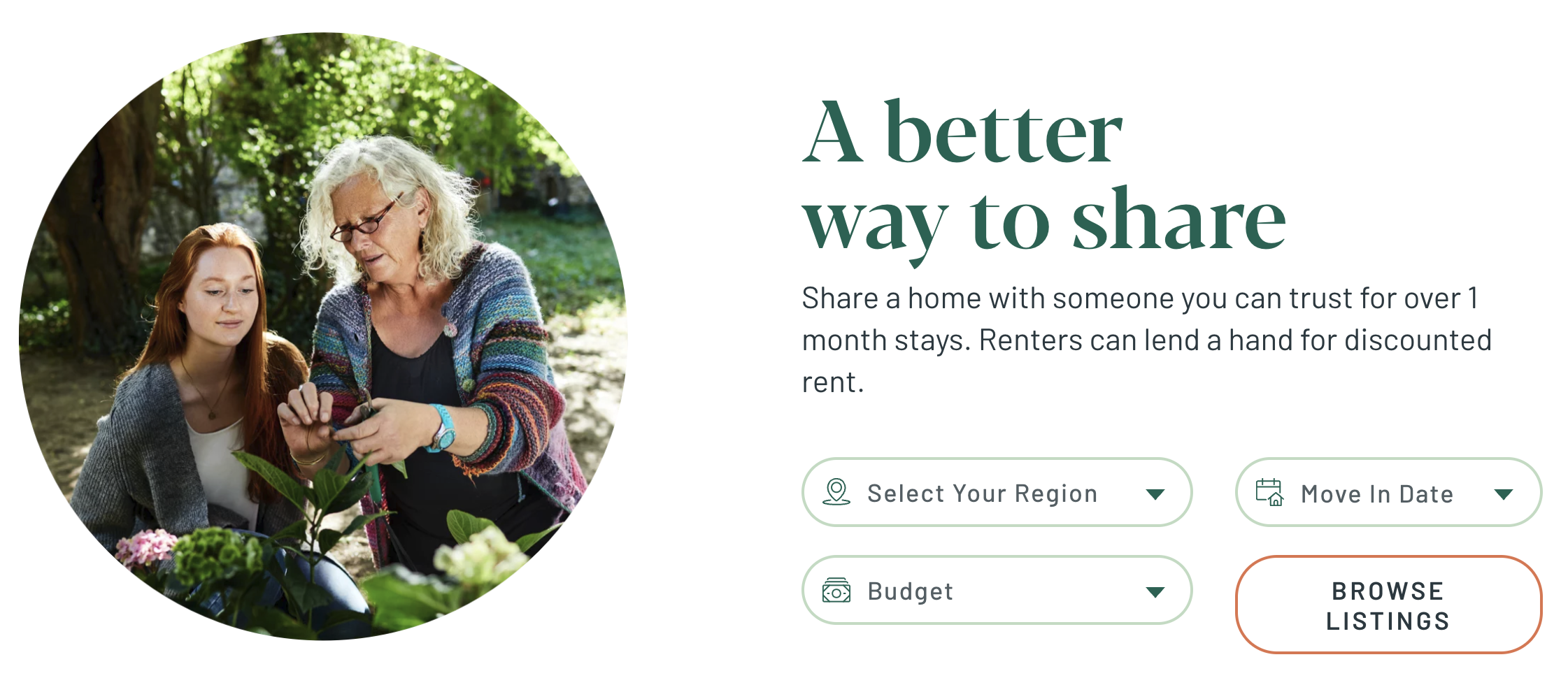
That is beginning to change. New models—from co-housing communities to home-sharing platforms to campus-based living—are testing what works. Most are small. Some are imperfect. But together, they are expanding what is possible.
The underlying question is simple:
If more people want to live across generations, can our systems make that easier?
Because in the end, intergenerational living is not really about age.
It is about whether the places we create allow people to live alongside one another—and, over time, to learn from one another.