


It Takes Courage
The best decisions about where and how to live require courage. Often in multiple forms.
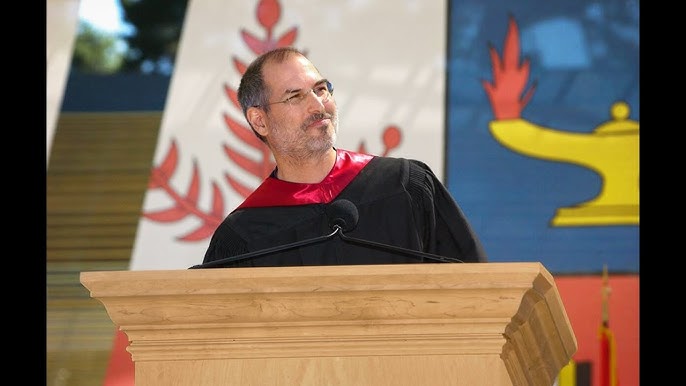
Each spring, as commencement season approaches, a familiar set of voices re-enters the cultural conversation. Among them, few have endured like Steve Jobs’ 2005 Stanford commencement speech—watched tens of millions of times and still circulating widely this time of year. Jobs touched on many ideas that day, but one stands out with unusual clarity: the call to have the courage to live your own life, not someone else’s. It’s a simple idea, but not an easy one. In fact, it may be one of the most difficult decisions a person ever makes—especially when it comes to something as foundational as where and how you choose to live.
Courage, as Franklin D. Roosevelt framed it, is not the absence of fear, but an assessment that something else is more important than fear. That distinction matters. If courage required certainty or comfort, most meaningful decisions would never happen. Instead, courage shows up precisely when the outcome is unclear—when the stakes feel real, and the path forward is not fully visible. Place Planning sits squarely in that territory. It asks you to examine your life honestly, imagine a different future, and, at times, act without guarantees.
It Takes Courage to Self-Assess & Look Forward
It takes courage to evaluate your life. When you pause long enough to really look, you may notice tensions that are easy to ignore in the rhythm of everyday life. Perhaps your environment no longer energizes you. Maybe your health would benefit from a different climate, pace, or access to care. Your community might feel thinner than it once did, or your financial picture may be subtly out of alignment with where you live. These are not abstract considerations—they are the four quadrants of place: environment, health, community, and finances. Looking at them clearly can be uncomfortable. It requires a willingness to acknowledge what’s not working, even when nothing is obviously “wrong.” And beyond the present, it takes another layer of courage to look forward. The next five or ten years inevitably hold uncertainty—changes in relationships, energy levels, priorities, possible health changes. Planning for that future means stepping into ambiguity rather than avoiding it.

Making Changes Requires Courage
It also takes courage to make a change. Whether you ultimately stay where you are or choose to move, change introduces friction. New places come with unfamiliar routines, the challenge of building relationships from scratch, and the vulnerability of starting over socially. Even staying put can require change—reinvesting in your current community, reshaping how you spend your time, or redefining your relationship with your surroundings. There is no version of Place Planning that is entirely passive. The moment you begin to act on what you’ve learned, you are stepping into effort, and often into discomfort.
It Takes Courage to Go Your Direction
Then there is the quieter, often overlooked dimension: it takes courage to do something that’s not popular. Decisions about place are deeply personal. What feels like the right fit for one person can feel completely wrong for another. And yet, the people around you—friends, family, colleagues—often have opinions. You might consider downsizing when others expect you to “upgrade.” You might move toward a smaller, tighter-knit community when your peers are drawn to larger, more dynamic cities. Or you might choose to stay in place when there is subtle pressure to relocate. In some cases, the right decision may be to live near family. But even that choice can come from different motivations. Made out of guilt or obligation, it can create quiet resentment over time. Made out of love and respect, it can deepen relationships and provide a sense of meaning. The difference lies in intention—and in the courage to be honest about that intention, even when it’s not easily explained to others.

Ultimately, this is why courage matters so much in Place Planning: because the alternative is drift. Without the willingness to evaluate, to imagine, to act, and to stand by your decisions, it becomes easy to let circumstances dictate your path. And while drift can feel comfortable in the short term, it often leads to a subtle misalignment over time. The encouraging reality is that when courage is present—even in small increments—it tends to compound. A clearer understanding of your priorities leads to better decisions. Better decisions create better alignment. And better alignment, over time, increases the likelihood of a life that feels both intentional and sustainable.
As commencement speakers take the stage in the coming weeks, many will echo some version of the same message: your life is your own to shape. It’s a message that resonates not just at graduation, but at every transition point that follows. Place Planning is one of those moments. It asks you to decide—not just where you could live, but where you should live, given who you are and where you’re going. And like the best commencement advice, it ultimately comes down to a simple but demanding question: do you have the courage to choose your own path?